
How Do Diaphragm Vacuum Pumps Work?
Diaphragm vacuum pumps create vacuum by repeatedly flexing a diaphragm inside the pump chamber. This movement draws gas in through an inlet valve and expels it through an outlet valve, producing clean, dry vacuum without oil or sliding seals.
Their oil-free design makes diaphragm vacuum pumps well suited for laboratory and industrial applications where contamination must be minimized.
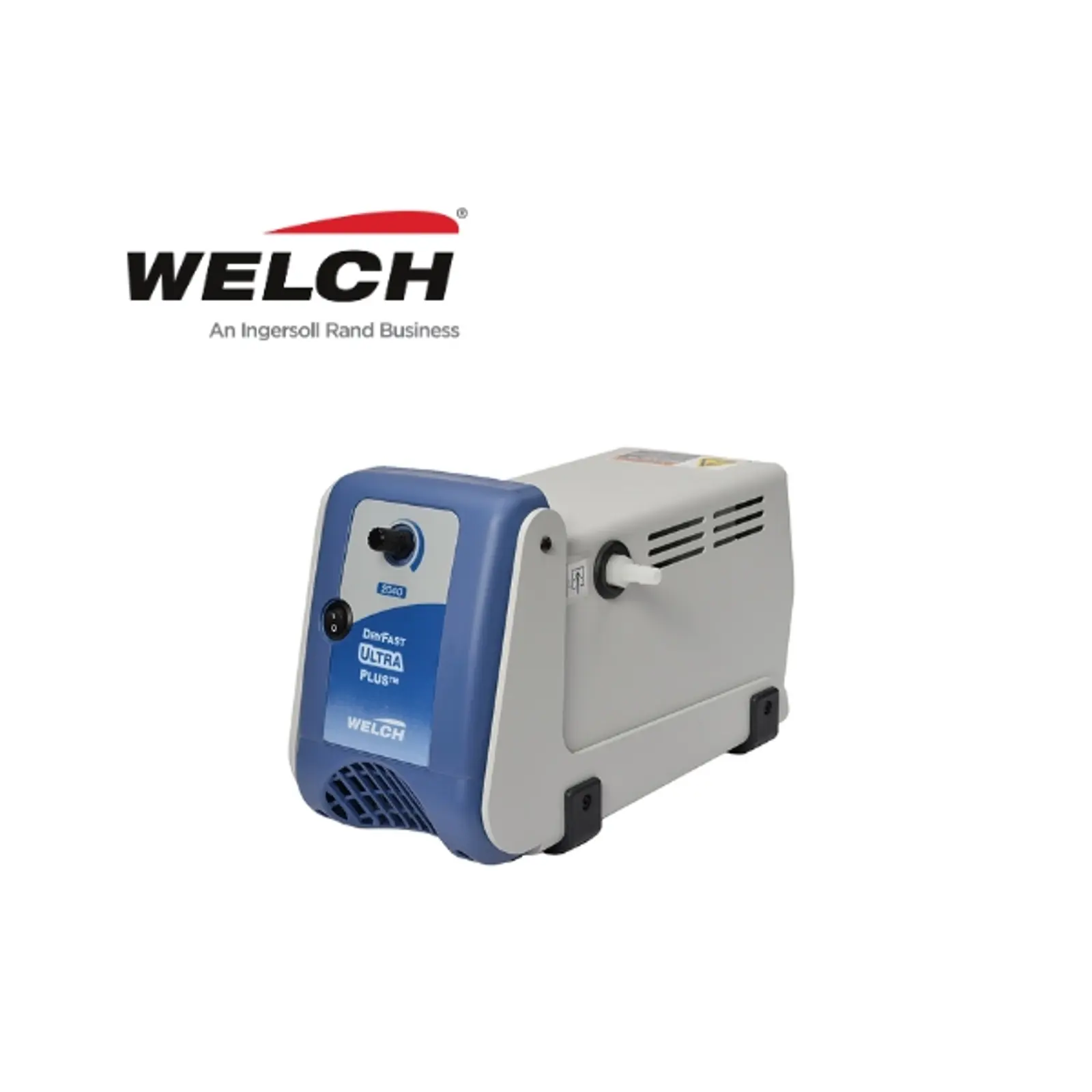
How Does a Diaphragm Pump Work?
A diaphragm pump uses a flexible membrane to change the volume inside a sealed pump chamber. An electric motor drives a connecting rod, which moves the diaphragm in a continuous cycle.
1. Air Enters the Pump
As the diaphragm moves downward, the volume inside the pump chamber increases. This creates suction, opening the inlet valve and drawing air or gas into the chamber.
2. The Air Is Compressed
As the diaphragm moves upward, the chamber volume decreases. The inlet valve closes, and the air or gas inside the chamber is compressed.
3. Air Exits the Pump
The increased pressure opens the outlet valve, allowing the compressed air or gas to leave the chamber. The cycle then begins again, producing a continuous flow.
The diaphragm creates a seal between the drive mechanism and the pumping chamber. This allows the pump to operate without oil in the pumping chamber and helps protect the pumped medium from lubricant contamination.
Main Components of a Diaphragm Vacuum Pump
A diaphragm vacuum pump uses a small number of essential components to produce vacuum:
- Diaphragm: A flexible membrane that moves to increase and decrease the chamber volume.
- Drive mechanism: An electric motor, eccentric drive and connecting rod that move the diaphragm.
- Pump chamber: The sealed space in which air or gas is drawn in and compressed.
- Inlet valve: A one-way valve that opens to allow air or gas into the chamber.
- Outlet valve: A one-way valve that opens to discharge compressed air or gas.
The diaphragm and valves are the primary components exposed to the pumped medium. Material selection is therefore important when the pump is used with solvent vapors, corrosive gases or other aggressive media.
Why Use a Diaphragm Vacuum Pump?
Diaphragm vacuum pumps are a practical choice for clean vacuum applications because they combine oil-free operation with a compact, low-maintenance design.
- Oil-free operation: No oil is required in the pumping chamber, helping reduce the risk of sample contamination.
- Low maintenance: The design does not require oil changes and has relatively few wear components.
- Chemical compatibility: Chemical-duty models can use chemically resistant materials such as PTFE for applications involving aggressive gases or solvent vapors.
- Clean, dry vacuum: Oil vapor and oil backstreaming are avoided.
- Compact design: Many diaphragm vacuum pumps are suitable for laboratory benches and integration into vacuum systems.
- Quiet operation: Depending on the model, diaphragm technology can offer low sound levels for laboratory environments.
Chemical resistance depends on the materials used in the specific pump, so users should always verify compatibility for the gas or vapor being handled.
Common Diaphragm Vacuum Pump Applications
Welch diaphragm vacuum pumps support laboratory and industrial workflows where clean, oil-free vacuum is important.
Common diaphragm pump applications include:
- Laboratory vacuum filtration
- Rotary evaporation
- Degassing liquids
- Aspiration systems
- Vacuum ovens
- Desiccators
- Gel drying
- Sample preparation
- Chemical and solvent processing
The correct pump depends on the required vacuum level, flow rate, chemical compatibility and operating conditions.
Choosing the Right Diaphragm Vacuum Pump
Different applications require different vacuum depths, flow rates and wetted materials. Standard-duty diaphragm pumps are suitable for many routine laboratory processes, while chemical-duty pumps are designed for applications involving aggressive gases and solvent vapors.
For model-specific information, review the technical specifications for each pump or browse the Welch diaphragm vacuum pump range.
Find a Diaphragm Vacuum Pump
Related Diaphragm Pump Resources
FAQs
Most diaphragm vacuum pumps use an electric motor to drive the connecting rod and move the diaphragm. Power requirements vary by pump model, so users should check the product specifications before installation.
Need more information? Talk to us!