


welch-logo.png

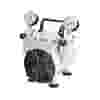
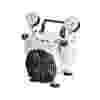
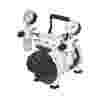
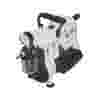
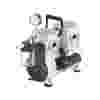
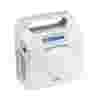
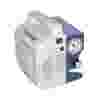
WOB-L® pumps are fully accessorized, robust, oil-free piston pumps designed for standard-duty applications where corrosion resistance is not required, such as filtration, gas sampling, vacuum drying, or automation technology. A piston vacuum pump operates using a specialized piston mechanism to generate a vacuum. 

WOB-L® piston vacuum pumps stand out for their speed, user-friendly design, and durability, delivering exceptional efficiency and reliable performance.
Welch’s offer includes single-head and twin-head piston vacuum pumps, OEM, and built-in pumps, along with an extensive selection of vacuum pump accessories. 

  • ultimate vacuum from 292 to 6 mbar 

  • flow rates from 0.66 to 12.06 m³/h 


EXPLORE OUR WOB-L® PISTON VACUUM PUMPS

Welch's WOB-L® Piston Vacuum Pump Types

Welch offers a diverse portfolio of WOB-L® piston pumps to meet various needs and applications.  

Single Stage Vacuum & Pressure Stations: 

  • These pumps are available in three sizes and include inlet/outlet gauges, traps, and vacuum/pressure control valves. They are ideal for applications like vacuum filtration aspiration and tissue culture filtration, known for their quiet operation. 

Dual Stage Vacuum Pumps with Catch-Pot and Regulator:  

  • These pumps offer high flow rates and deep vacuum capabilities, making them perfect for drying and degassing applications. They feature a convenient catch-pot with built-in vacuum regulation and a dial vacuum gauge. 

  • Models , , and 2581

Single Stage Vacuum Pumps with Catch-Pot and Regulator:  

  • Designed for tasks such as aspiration, vacuum chucking, and multi-funnel filtration manifolds. They come with a catch-pot featuring built-in vacuum regulation and a gauge. 

Models and 2585.

WOB-L® Piston Vacuum Pump Applications

Piston pumps are reliable, dry vacuum/pressure pumps suited for a wide array of physical and aqueous vapor applications. Designed without the need for corrosion resistance (please note their unsuitability for pumping acidic, basic, or organic fumes), these oil-free vacuum pumps are recommended in a wide range of standard duty applications in both laboratory and industry, including: 

  • Laboratories: Essential for tasks like sample preparation, controlled environments, and filtration in scientific experiments like DNA/RNA extraction. 

  • Analytical Instruments: Enables precise measurements in gas chromatographs and spectrometers. 

  • Industrial Manufacturing: Used in vacuum drying, casting, and packaging processes to enhance overall product quality. 

  • Pharmaceuticals: Integral to critical processes like freeze-drying and solvent removal, ensuring the purity and stability of products. 

  • Food Processing: Ensures high-quality products with extended shelf life and preserved flavors during packaging and processing. 

  • Automotive Testing: Essential for brake system testing, emission control, and leak detection. 

  • Research Facilities: Used in experiments, mass spectrometry, electron microscopy, and more. 

  • HVAC Systems: Evacuates and maintains vacuum in refrigeration and air conditioning units. 

  • Environmental Monitoring: Enables accurate air and gas sampling for pollution control and assessment. 

  • Material Handling: Removes air and gas from materials during molding and curing processes. 

Welch Piston Pumps: Key Benefits

Piston pumps are among the most popular and widely used vacuum technologies. Welch’s WOB-L® dry piston vacuum pumps offer numerous advantages to help enhance and optimize your mission-critical vacuum processes, including 

  • Enhanced Performance: WOB-L® piston technology ensures exceptional vacuum and flow capabilities within a compact package, delivering reliable performance across various applications. 

  • Dependable Operation: Crafted with quality materials and unique design features, WOB-L® pumps minimize maintenance needs and promise an extended product lifespan, ensuring reliable operation over time. 

  • Controlled Vacuum: Equipped with regulators and gauges, WOB-L® pumps offer straightforward adjustment and monitoring of vacuum levels, allowing tailored control as per your requirements. 

  • Protection Mechanism: An inlet water trap safeguards the pump from inadvertent water intake, preserving its performance integrity, even in challenging conditions. 

  • Motor Safety: All WOB-L® models feature 1PH motors with built-in thermal overload protection, providing an added layer of safety to your vacuum processes. 

Oil-Free Operations Benefits

Oil-free piston pumps provide a range of benefits for your operations: 

  • Environmental Friendliness: By eliminating the need for lubricating oil, these pumps reduce the risk of oil contamination, creating a cleaner working environment. 

  • Cost Savings: With no oil to purchase, handle, or dispose of, oil-free piston pumps lead to reduced operating costs over time. 

  • Maintenance Ease: These pumps require less maintenance compared to oil-based alternatives, translating to less downtime and increased productivity. 

  • Enhanced Product Purity: Oil-free operation prevents oil-related contamination, making these pumps ideal for applications requiring the utmost product purity. 

  • Lower Operating Temperatures: Without oil, these pumps run cooler, leading to longer component life and improved overall reliability

Reliable Vacuum Solutions: Piston Pump Technology Explained

A piston vacuum pump is a specialized type of pump that operates using a unique piston mechanism to create a vacuum. This mechanism involves the movement of a piston within a cylinder to generate a low-pressure environment by removing air or gas molecules from a confined space. As the piston moves, it creates suction that draws in the surrounding air or gas, effectively creating a vacuum within the system. This technology is widely used in various applications, ranging from industrial processes to laboratory experiments, where the creation of a controlled vacuum environment is essential for specific tasks.  

FAQs

WOB-L pumps Use a wobbling piston mechanism where the piston is driven by an eccentric bearing on the motor shaft. The piston moves linearly inside a cylinder, compressing gas without lubrication. These pumps are known for higher flow rates and deeper vacuum levels.


Diaphragm Pumps use a flexible diaphragm that moves up and down to create suction and discharge. These pumps are ideal for handling corrosive or abrasive vapors due to chemical-resistant materials. They typically offer moderate vacuum levels and lower flow rates compared to piston pumps.


WOB-L piston pump is better for applications requiring high vacuum performance, fast flow rates, and not-corrosive media.

Diaphragm pumps are better for applications involving corrosive or sensitive chemicals and requiring a low-maintenance solution.